
PCIe vs USB Capture Cards
The short version: PCIe for permanent, multi-channel or high-reliability installations; USB for portable, single-source setups that need to move between machines.
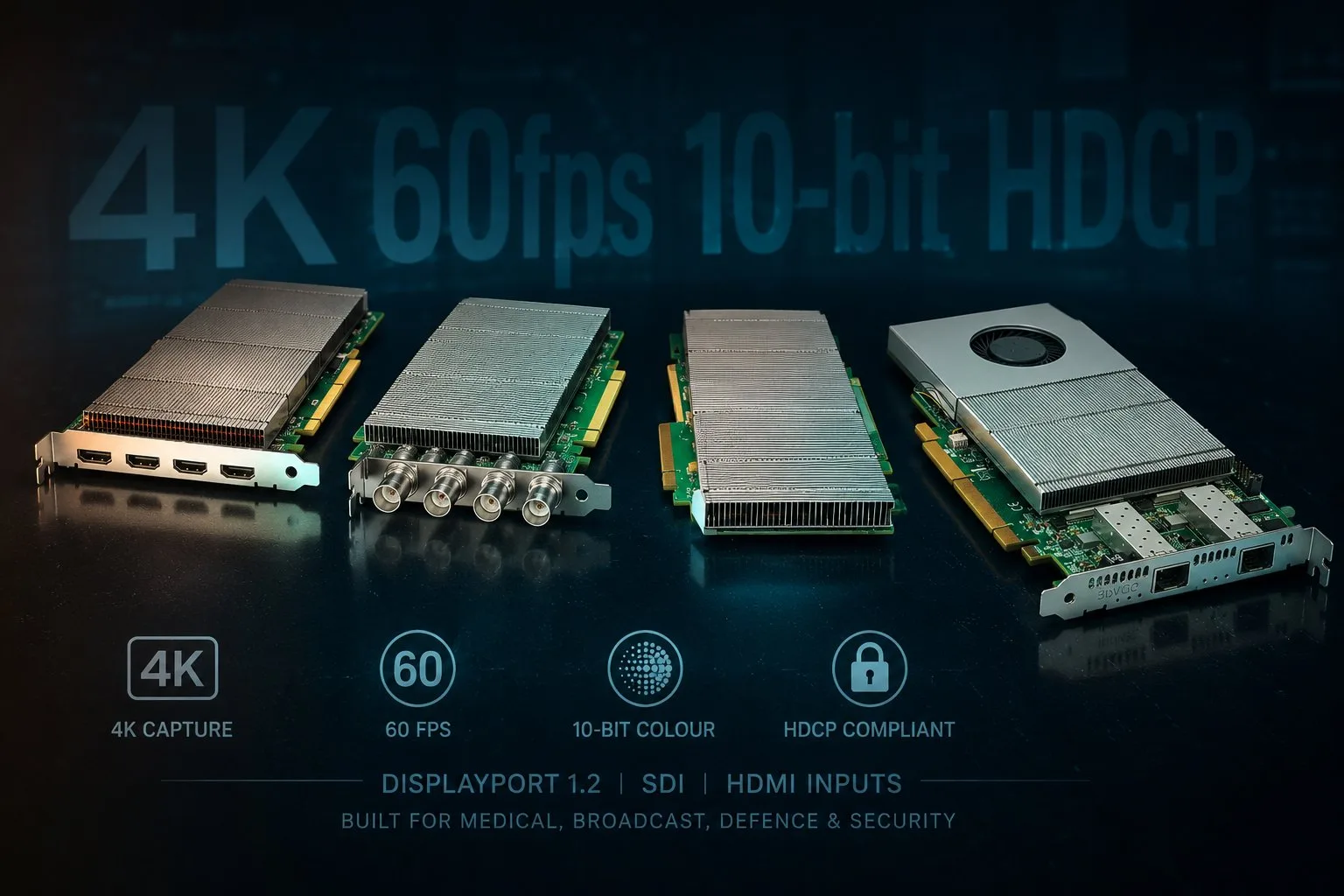
A PCIe capture card talks to the host system directly over the PCIe bus, giving it dedicated bandwidth that doesn't compete with anything else on a shared external bus. That matters for two things in particular — capturing several sources on one machine at once (something USB struggles with once you're past two or three devices sharing the same host controller), and sustained reliability under 24/7 load, which is why every EMS video wall, broadcast and medical capture deployment is built on PCIe hardware.
USB capture earns its place where portability matters more than channel density — a single camera feed into a laptop that moves between sites, for instance. If that's the requirement rather than a permanent multi-channel install, a USB device is the more practical fit; EMS's Xtreme range is deliberately PCIe-only, built for the fixed-installation, multi-channel end of the market rather than portable single-source capture.
Already decided on PCIe? See how PCIe bandwidth and slot compatibility affects which chassis and slot to specify a card into.
Still not sure which side of that line your project falls on? Get in touch with your source count and whether the system needs to be portable, and we'll point you the right way.