
XtremeAV Capture Cards — Multi-Channel HD & SD Capture
XtremeAV Range
XtremeAV is built for projects that need to mix modern HD sources with legacy SD or analogue inputs on a single card, with full analogue and digital audio capture synchronised across every channel. It's a common fit for medical imaging suites and lecture capture rigs pairing a current HDMI/SDI camera with an older SD monitoring or document-camera feed — see XtremeAV-SDI for three-channel SDI/DVI capture or XtremeAV-HD2+ for a two-HDMI-channel layout.
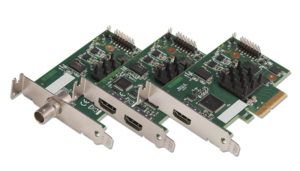
Not sure which capture range fits your source signal? See our buyer's guide in the Knowledge Base.
 SKU: X-HD4
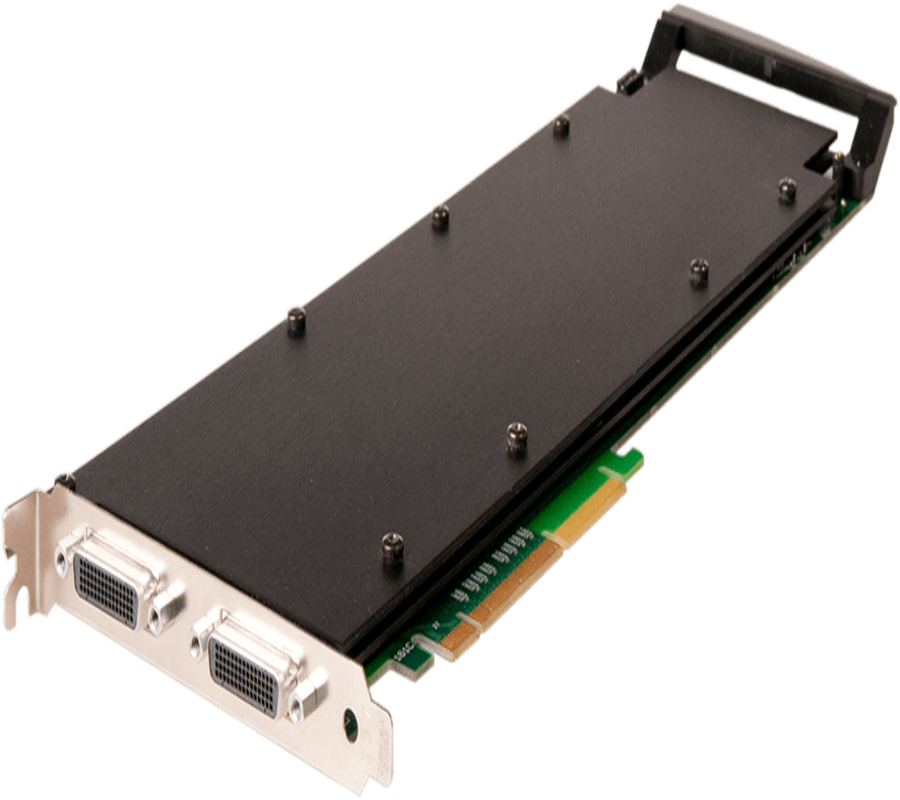
Xtreme-HD4
- 8-lane PCIe Gen.3 bus
- 3.2 GB/s total capture bandwidth
- Four EMS capture processors
- Frame buffer memory: 4 × 256 MB
 SKU: XAV-SDI
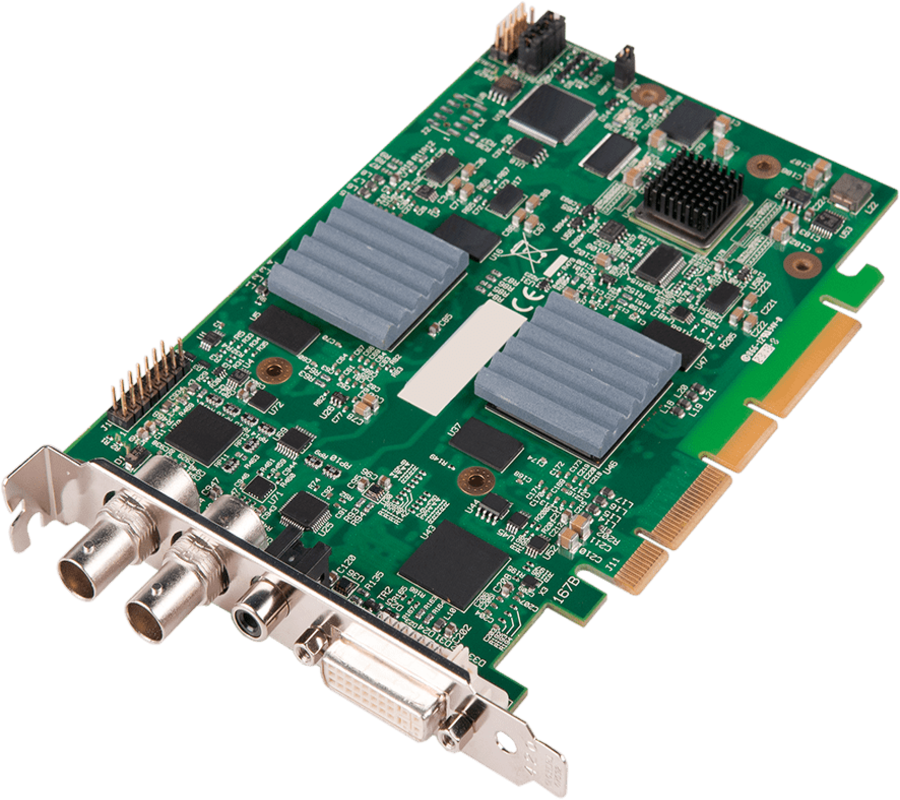
XtremeAV-SDI
- Four-lane PCIe, 1.6 GB/s total bandwidth
- Three independent capture channels
- Direct DMA to third-party graphics memory
- Full analog & digital audio support
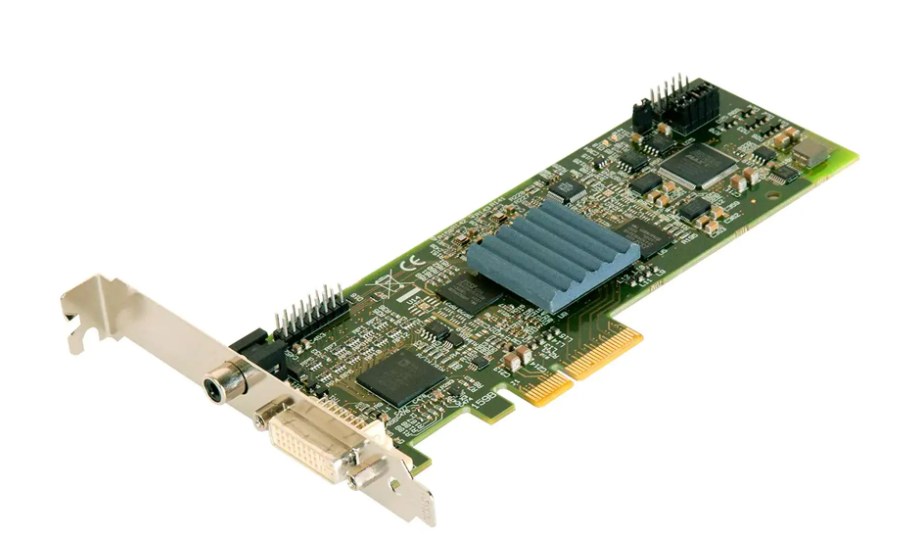 SKU: XAV-H
XtremeAV
- One HD channel (DVI-I: HDMI/DVI/RGB/YPbPr) + one SD composite channel, captured simultaneously
- AM2 audio module and cable included — balanced/unbalanced analogue audio capture
- Half-height PCIe x4 card, 110mm x 170mm
- Up to 4096×4096 HD capture, 1080p60, with HDCP support alongside EMS graphics cards
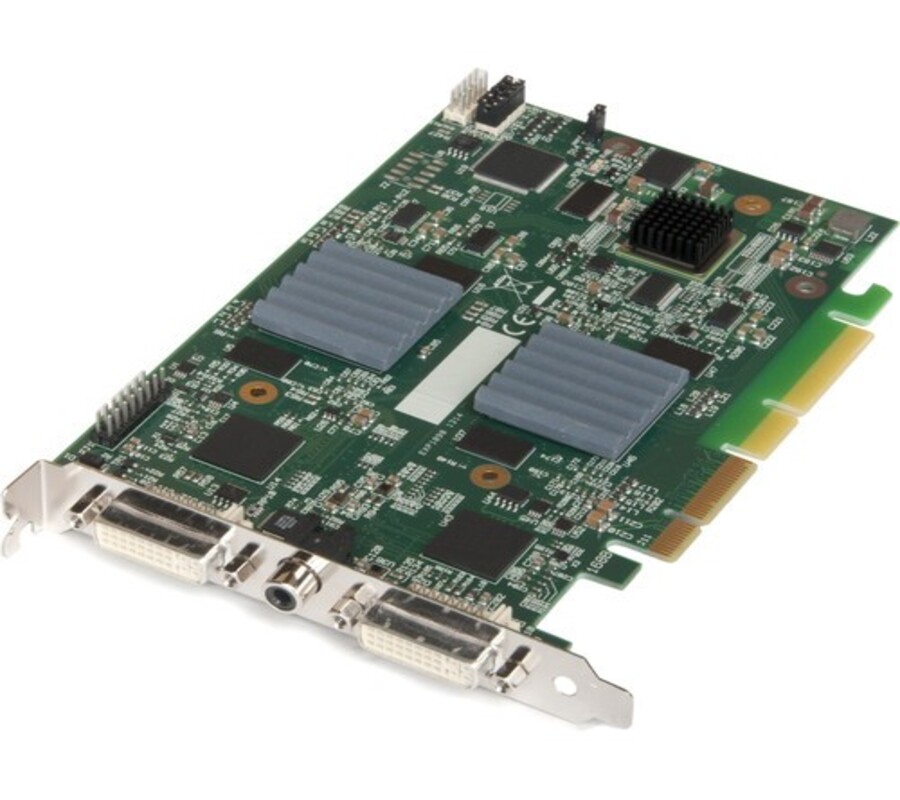 SKU: XAV-HD2
XtremeAV-HD2+
- Four-lane PCIe, 1.6 GB/s total bandwidth
- Two HD DVI channels + one composite input
- Full analogue & digital audio support
Built for the applications that can't afford to fail
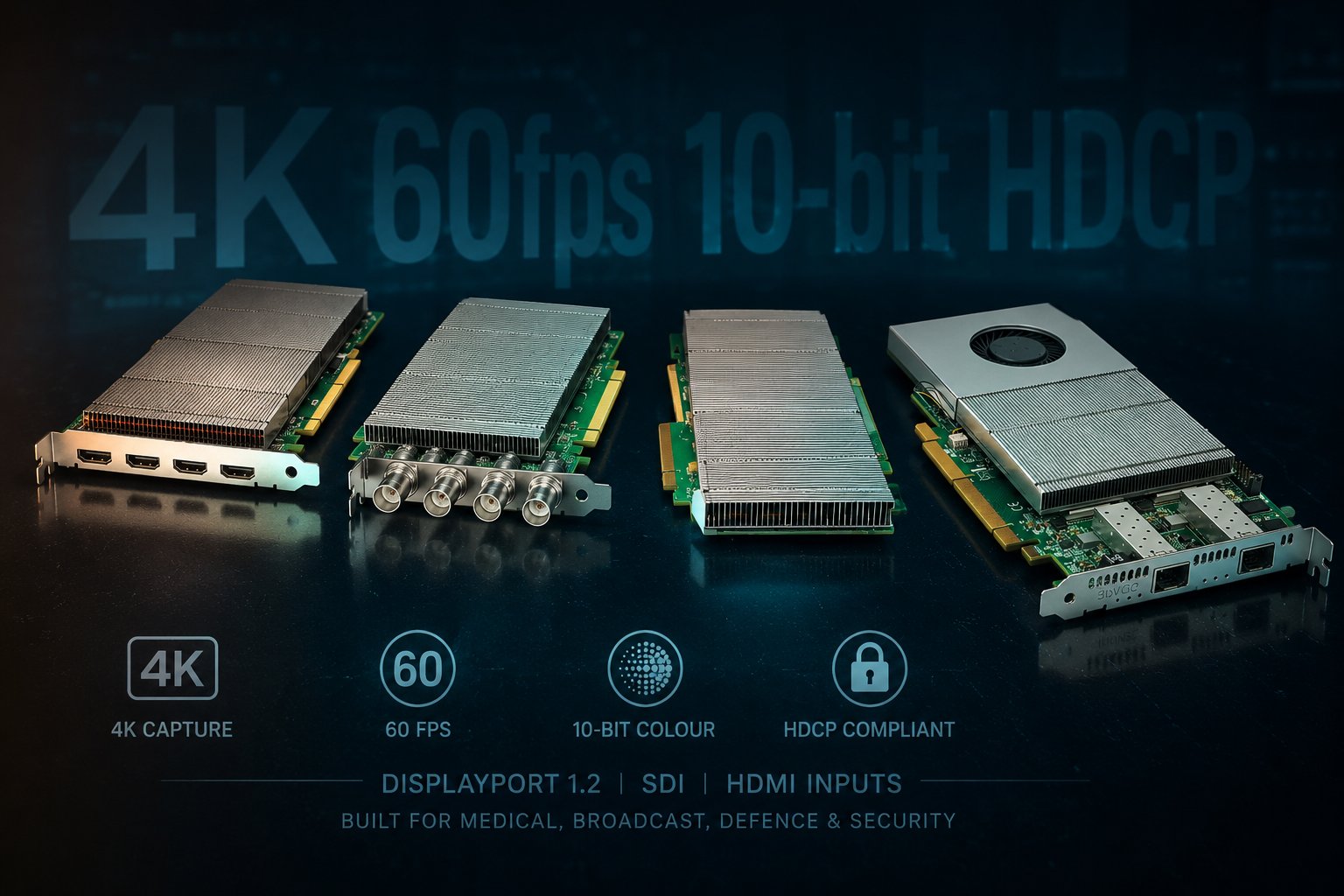
4K60 10-bit capture with HDCP compliance across the current-generation XtremeDV range
Every card — from XtremeDV to XtremeLC — runs the same unified Windows/Linux driver, so switching ranges doesn't mean relearning an API
Hardware-based scaling, EDID management and automatic signal detection built into the card itself, not a software workaround
Freely combine capture, graphics and IP decode cards in one VSN chassis for a single integrated system
Frequently Asked Questions
What's the difference between XtremeDV, XtremeAV, XtremeRGB and XtremeLC?
XtremeDV is the current generation for 4K60 HDMI, DisplayPort and SDI capture. XtremeAV and XtremeRGB are earlier-generation HD/analogue ranges still in active use where full 4K performance isn't needed. XtremeLC is the compact, lower-cost single/dual-channel range for lecture capture and space-constrained builds.
Can I mix cards from different ranges in one system?
Yes — any Xtreme capture card can be combined with XtremeImage graphics cards and Xtreme-ActiveSQX IP decode cards in the same VSN chassis, in whatever mix the application needs.
Do I need a different driver for each card?
No — every card across the whole capture range uses the same unified Windows/Linux driver, so a system running several different Xtreme cards only needs one driver install.
What resolutions are supported?
Depends on the range. XtremeDV supports up to 4K60 4:4:4 with HDCP 2.2. XtremeAV/XtremeRGB top out at HD or reduced-chroma 4K. Check the individual product spec table before assuming "4K" means the same thing across every card.